Bunker Survey
Overview
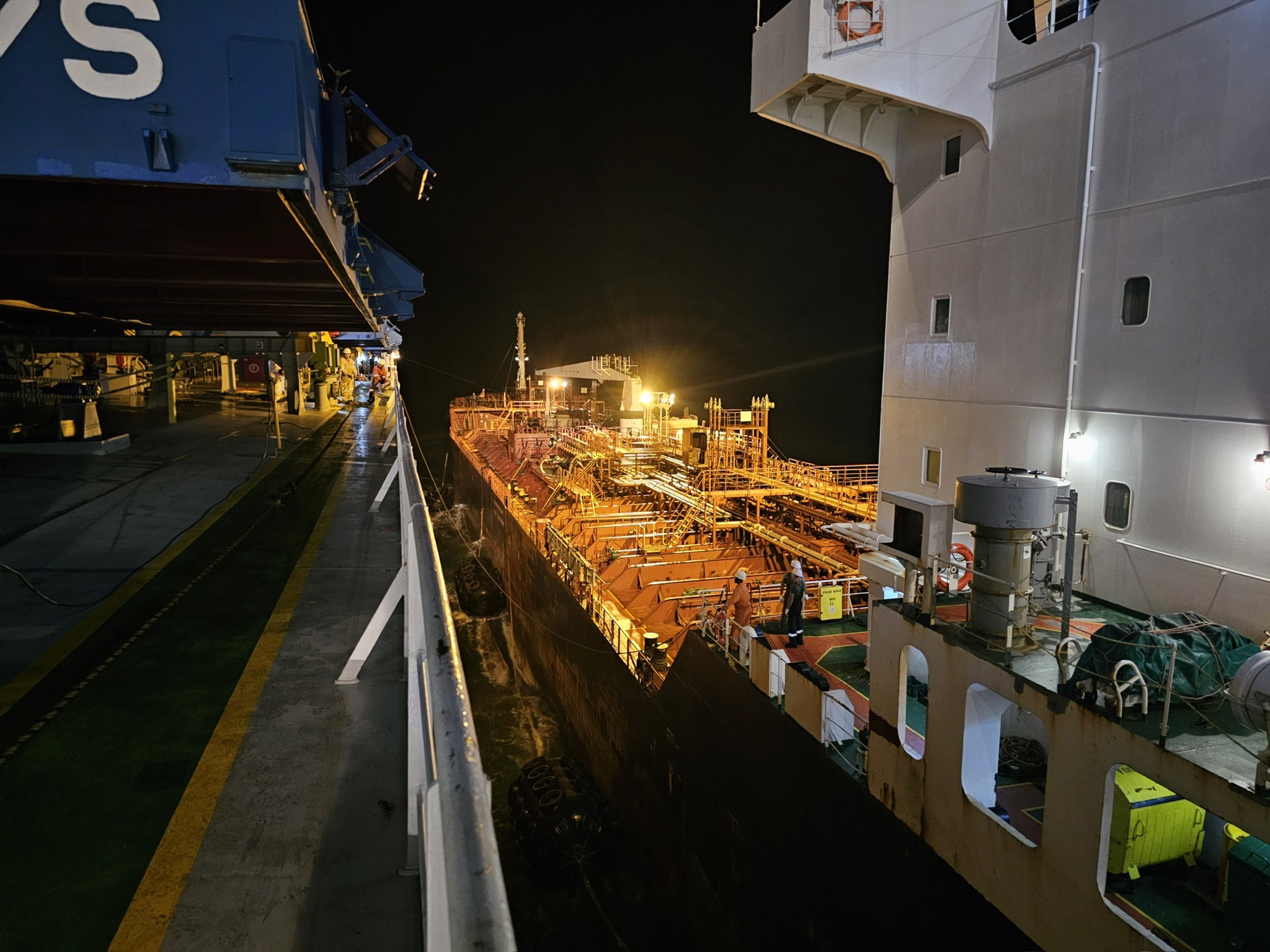
Bunker operations combine short port windows, supplier interfaces, and paperwork that often becomes “the evidence” weeks later. CARGOWARD® attends bunkering calls in Brazil to document the transfer as it occurs—what the declared quantity is, how the interface was measured, how samples were drawn and sealed, and how custody was transferred.
This service is built around three deliverables that matter commercially: a clear chronology, a document register (including BDN as provided), and a sample/seal register that can be traced to laboratory results when testing is requested.
What we do
What we verify and record
Parties and interface: vessel, supplier/barge, terminal context (when applicable).
BDN details as presented (identifiers and declared figures), plus supporting documents received during attendance.
Measurement basis at the interface, including meter context where an MFM is involved and access is permitted.
Vessel-side tank context (ROB / ullage / soundings) only when safe access is granted and within agreed scope.
Sampling method as performed (e.g., continuous/drip where applicable), labeling, sealing, and custody handovers.
What we do not do
We do not “assume” values that cannot be verified due to access, safety, or terminal restrictions.
We do not rewrite supplier documentation—our role is to register what was issued/provided and what could be physically checked.
We do not act as Class, and we do not certify seaworthiness or compliance status.
Measurement and sampling controls
The attendance is organized around controls that reduce dispute risk:
Control point | What is recorded | Why it matters |
|---|---|---|
Quantity interface basis | What measurement basis was used/presented (documents, meter context, vessel-side checks if permitted) | Prevents later disagreement on “which numbers were used” |
BDN register | BDN identifiers and declared figures as provided; timing of issuance/receipt | Anchors the commercial record |
Sampling method | Sampling point and method as performed; continuity notes | Protects sampling integrity |
Seal log | Sample IDs, label content, seal numbers | Prevents sample substitution arguments |
Custody handover | Who received which sample, when, and how acknowledgment occurred | Links sampling to later testing |
Exceptions log | Access restrictions, deviations, missing docs, stoppages | Keeps conclusions defensible |
Where we operate
We mobilize bunker survey attendance across Brazil through a vetted network of surveyors operating under CARGOWARD® procedures and review discipline. Coverage includes, not limited to: Rio Grande, Santos, Paranaguá, Antonina, Imbituba, São Francisco do Sul, São Sebastião, Rio de Janeiro, Itaguaí, Vitória, Tubarão, Praia Mole, Salvador, Aratu, Suape, Maceió, Recife, Cabedelo, Pecém, Itaqui, Fazendinha, Macapá, Vila do Conde, Barcarena, Mosqueiro, Santarém, Itacoatiara, Manaus, Natal, Termisa Offshore Terminal — and beyond.
Availability depends on safe access, local rules, terminal restrictions, and schedule constraints.
Standards, compliance and governance
Bunkering attendance sits within the compliance environment of port calls and fuel documentation, as applicable:
MARPOL Annex VI context and fuel documentation discipline (as applicable to the call)
SOLAS, ISM Code, ISPS Code, and local port/terminal safety rules governing access
ISO 8217 testing context when laboratory analysis is requested
We operate as an independent attendance service. References to industry practice do not imply representation of, or endorsement by, any class society.
Governance applied per job:
Scope locked before attendance (what is being recorded; what cannot be verified).
Document register and sample register maintained as controlled records.
Deviations recorded at the time they occur, with practical impact stated.
Conflict-of-interest discipline and controlled communications.
Evidence, reporting and laboratory testing
Bunker survey reporting is delivered as a record set with clear traceability:
Chronology of the bunkering window (milestones, interruptions, completion).
Document register (BDN as provided, sampling forms, supplier documents received).
Sample register and seal log (IDs, labels, seals, custody handovers).
Photo references where permitted (labels, seals, handovers, key documents).
Exceptions log (restricted access, missing paperwork, procedural deviations), stated without interpretation.
When ISO 8217 testing is requested, the laboratory appendix is referenced back to the sample register using sample ID and seal number.
Typical use-cases
Owners/charterers seeking bunker survey in Brazil to reduce quantity and sampling disputes.
Operations where a controlled seal/custody trail is required for contractual protection.
Multi-party bunkering calls where later “reconstruction” is risky and an attendance record is safer.
Situations where ISO 8217 testing is requested and sample-to-lab linkage must be auditable.
What clients receive
Bunkering chronology log with key timestamps where available.
BDN and documents register showing what was received and referenced.
Sample register + seal log + custody handovers (when sampling is requested).
Exceptions log tied to the chronology.
Findings summary limited to what was observed/recorded and what documents were provided.
FAQ
Q: Do you attend bunkering by barge and alongside terminals?
A: Yes, subject to safe access and local/terminal restrictions.
Q: Do you guarantee the quantity?
A: No. We document the measurement basis presented and verify what is safely accessible. Where verification is restricted, the limitation is stated explicitly.
Q: What sampling details do you capture?
A: Sample IDs, label content, seal numbers, custody handover points, and receiving acknowledgments—plus photos where permitted.
Q: Can you coordinate ISO 8217 testing?
A: Yes, when requested. Testing is coordinated through ISO/IEC 17025 accredited laboratories as applicable, and results are linked to the sample ID and seal number recorded during attendance.
Q: Is this a Class survey?
A: No. This is an independent attendance service.
Limitations
This is a professional bunker survey attendance service based on accessible observations and documentation. It is not a Class survey and not a seaworthiness certification. Findings and conclusions are limited to:
Accessible observations under safe access and local/terminal restrictions
Documents provided or made available during attendance
No assumptions regarding concealed, inaccessible, or unobserved conditions
Outcomes may be affected by access constraints, terminal operating rules, safety requirements, timing, and the availability/quality of documents and sampling access during the bunkering window.
Deliverables
Below is what the client receives at closeout, organized as separate artifacts for easy forwarding to owners/charterers and audit teams.