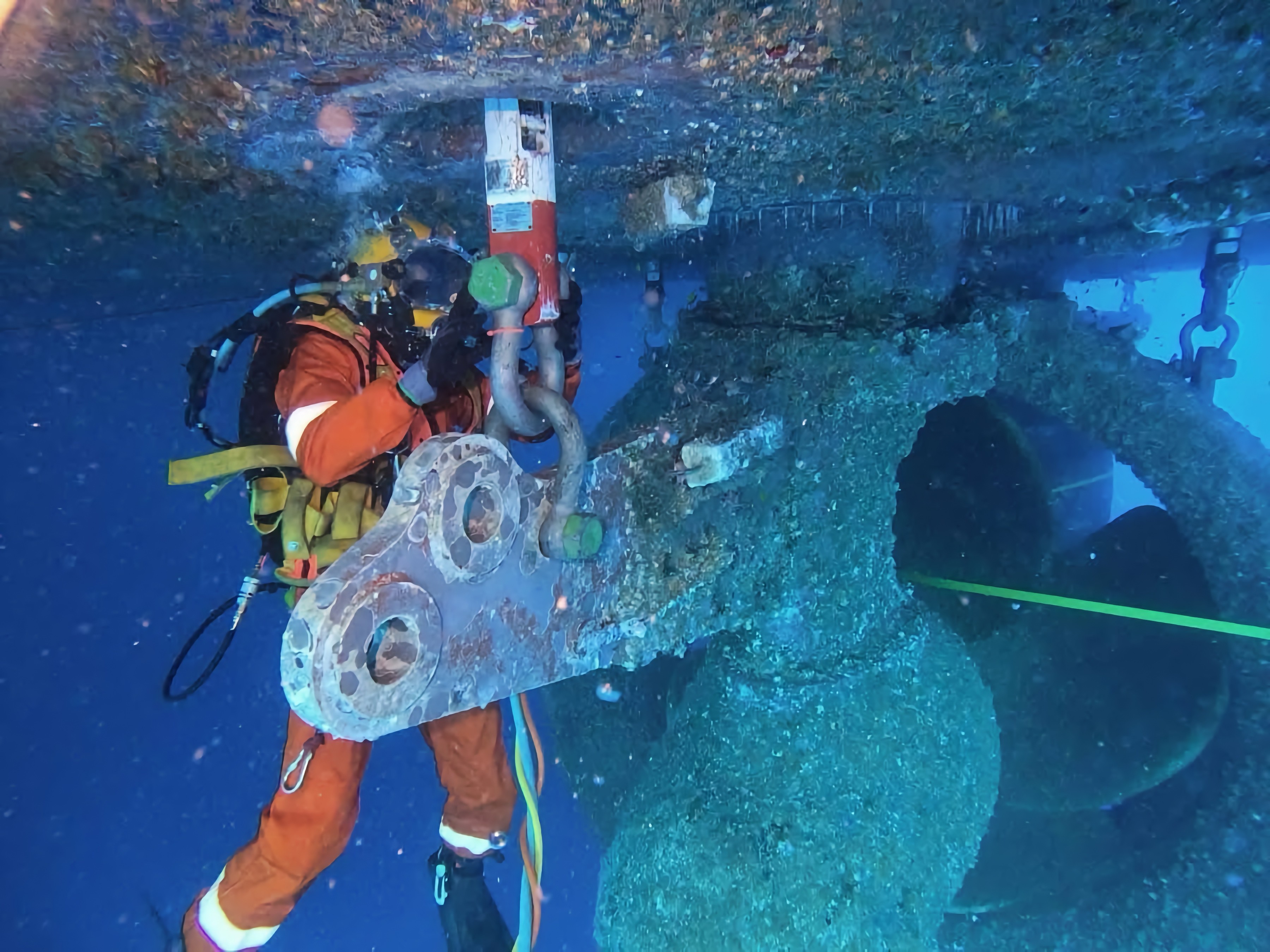
Ship Biofouling: Hydrodynamics & Operational Risk

Introduction
In naval architecture, surface condition is not a cosmetic variable—it is a boundary condition that governs wall shear, turbulence production, and the quality of the stern wake delivered to the propulsor. Bulk carriers operate at Reynolds numbers so high that their boundary layers are fully turbulent across most of the wetted surface; in that regime, incremental roughness can translate into measurable increases in resistance and power demand.
Biofouling should therefore be treated as a performance state rather than a maintenance inconvenience. It can shift the speed–power relationship, distort propeller inflow, and alter cavitation inception. Beyond consumption, fouling can compress operating margins: shaftline loading rises when trying to hold speed, vibration signatures may change, and sea-water cooling resilience can be affected when intake regions foul.
This engineering note is prepared by the CARGOWARD® Engineering & Diving Team to explain why in-water inspection and cleaning decisions should be framed as performance governance. Our field work is executed by qualified divers and engineers under port and environmental constraints; our assessments are grounded in resistance and propulsion fundamentals and measurement discipline.
Engineering note: Numeric ranges in this briefing are indicative bands intended for decision support; actual penalties depend on speed, displacement, trim, coating age, metocean conditions, and data normalization quality. Validation with vessel data is recommended.
Illustrative examples (why this matters in practice):
A vessel that “felt fine” at slow steaming may show a sharp penalty at higher speed because resistance scales roughly with
V^2.A partially fouled propeller can produce a larger penalty than a slime-dominant hull because it directly reduces propulsive efficiency (
Kt/Kq shift).Sea chest fouling is often invisible until thermal margins compress and alarms appear under higher load.
Table of Contents
The Physics: Why Surface Condition Dominates Energy Demand
Reynolds Number, CFD, and What Engineers Actually Model
Biofouling Severity Scale: From Slime to Calcareous Growth
Propulsion and Steering Risks Beyond Fuel
Sea Chests, Cooling Margins, and Hidden Failure Pathways
Charter-Party, Compliance, and Performance Governance
Decision Framework: When to Inspect, When to Intervene, What to Measure
Method, Assumptions, and Limitations (EEAT)
Frequently Asked Questions (FAQ)
Glossary
The Physics: Why Surface Condition Dominates Energy Demand
A ship’s total resistance can be decomposed into frictional, pressure (form), wave-making, and appendage components. For full-bodied ships such as bulk carriers, frictional resistance is typically a dominant share at service conditions. That makes the boundary layer—where viscous losses concentrate—the primary control volume of performance.
A turbulent boundary layer contains intense near-wall mixing. When the wall becomes rougher, turbulence production increases and the velocity profile shifts, raising wall shear stress. The consequence is simple: more propulsive power is required to maintain the same speed through water.
Illustration (what an operator may actually notice):
“Same RPM, lower speed” (speed–RPM divergence).
“Same speed, higher load” (power increase to hold speed).
Fuel per nautical mile drift that becomes more pronounced with higher speed.
Engineering note: Frictional resistance scales approximately with:
Rf ~ Cf × 0.5 × rho × V^2 × S
where Cf is the friction coefficient and S is wetted surface area. A small rise in Cf can become meaningful because V^2 amplifies the penalty at higher speeds.
Reynolds Number, CFD, and What Engineers Actually Model
The Reynolds number contextualizes why ship flows are almost always turbulent:
Re = (rho × V × L) / mu
where rho is seawater density, V is characteristic velocity, L is characteristic length, and mu is dynamic viscosity.
For a typical bulk carrier at service speed, Re is commonly on the order of 10^9. For propeller blades, local Re commonly falls in the 10^7–10^8 range. These regimes imply that turbulence is “locked in,” but the near-wall physics remain sensitive to roughness because roughness changes how turbulence is generated and dissipated close to the surface.
CFD is useful because it converts roughness into flow field outcomes: boundary layer thickening, stern wake deficit, and propeller inflow non-uniformity. In engineering practice, CFD commonly uses RANS turbulence models and represents fouling via an equivalent roughness ks. The limitations are equally important: real biofouling is patchy and irregular, and without vessel data the analysis must be interpreted as comparative and sensitivity-based rather than absolute.
What CFD typically reveals (clean vs. fouled):
Higher wall shear and thicker boundary layer near the aftbody.
Increased turbulence intensity entering the propeller disk.
Reduced propulsor efficiency via
Kt/Kqdegradation when blade roughness is introduced.Higher risk of unsteady loading when wake non-uniformity increases.
Engineering note: The strongest approach is to correlate inspection findings with shaft power/torque (if available), RPM, and speed through water, normalized for weather and loading—aligned with ISO-style monitoring discipline.
Biofouling Severity Scale: From Slime to Calcareous Growth
A technical decision needs taxonomy. Slime (biofilm) is a thin roughness layer that increases friction. Soft fouling (weed) adds drag and can induce local separation. Calcareous growth (barnacles, tubeworms) creates protrusions that can drastically increase effective roughness and local turbulence production—especially in stern and propulsor regions where flow is already complex.
A practical scale must therefore describe appearance, coverage, consequences, and symptoms in a way that can be applied consistently during in-water inspection.
Biofouling Severity Scale (0–5)
Level | Typical appearance | Coverage band (%) | Hydrodynamic consequence | Likely operational symptom |
|---|---|---|---|---|
0 | Intact coating, visually clean | 0–1 | Baseline roughness | Baseline speed–power curve |
1 | Thin slime / biofilm | 1–10 | Mild Cf increase; low protrusion | Early fuel/NM drift |
2 | Heavy slime / microfouling | 10–30 | Noticeable Cf increase; thicker boundary layer | Speed loss at constant RPM |
3 | Soft fouling patches | 30–60 | Added drag + local separation | Power increase; schedule impacts |
4 | Small calcareous growth | 10–40 localized | High roughness equivalent; inflow distortion | Torque/power rise; vibration onset possible |
5 | Heavy calcareous growth | 40–100 or severe hotspots | Strong separation + major propulsor penalty | High torque; noise/vibration escalation |
Illustrative mapping (indicative penalty bands):
Hull dominated by Level 1–2: roughly 1–15% added power/consumption (speed-dependent).
Propulsor dominated by Level 4–5: roughly 10–40% added power/consumption (often disproportionate).
Combined severe hull + propulsor: roughly 25–60%+ in worst cases.
Propulsion and Steering Risks Beyond Fuel
Fuel is the visible outcome; the engineering concern is margin. When resistance rises, the propulsion plant must deliver higher torque and power to maintain speed. This can push the engine toward less optimal operating regions, reducing efficiency and increasing thermal stress. That does not imply immediate failure, but it reduces resilience: the vessel has less headroom for adverse weather, schedule recovery, or unexpected operational demands.
Propeller fouling changes not only efficiency but also cavitation behavior. Roughness and protrusions modify the blade’s pressure distribution, while inflow non-uniformity increases unsteady loading. Over time, repeated operation under higher loads can support cavitation erosion progression and persistent vibration issues.
Rudder fouling is often underestimated. Reduced lift efficiency can increase steering angles to maintain heading, creating steering losses and affecting maneuverability in confined waters—an operational risk rather than a cost detail.
Illustration (risk signals that matter to technical managers):
New vibration band at a narrow RPM range.
Higher shaft power to maintain speed without corresponding metocean changes.
Increased rudder angle usage for course keeping.
Reports of higher stern noise or propeller singing (context-dependent).
Sea Chests, Cooling Margins, and Hidden Failure Pathways
Sea chest fouling is a different class of risk because it can trigger operational events. Fouling at gratings and intake pockets reduces effective flow area and increases head loss. Under higher engine load, heat rejection demand increases precisely when cooling flow may be constrained, compressing thermal margins.
In warm-water regions, inlet seawater temperature is already higher, which naturally reduces cooling capacity. Intake restriction becomes more consequential, potentially leading to alarms or derating. Because these events are often non-linear, sea chest condition deserves early attention.
Area Sensitivity Map for a Panamax Bulk Carrier
Area / system | Sensitivity (1–5) | Primary risk driver | Typical performance impact | Failure or alarm risks |
|---|---|---|---|---|
Flat bottom | 5 | Skin friction across large wetted area | High | Low direct |
Vertical sides | 4 | Friction + turbulence production | Moderate–high | Low direct |
Bilge keels | 2 | Local drag and turbulence | Low–moderate | Low |
Rudder | 4 | Lift degradation and cavitation sensitivity | Moderate | Medium |
Propeller | 5 | Efficiency loss + torque increase | Very high | High |
Hub/boss cap | 3 | Vortex behavior sensitivity | Moderate | Medium |
Sea chests & gratings | 5 | Flow restriction + head loss | Indirect to moderate | Very high |
Thruster tunnel (if fitted) | 2 | Flow obstruction | Low | Medium |
Appendages/anodes (notes) | 1–2 | Low global drag unless severe | Low | Mostly corrosion-related |
Sea strainers (system-level) | 5 | Blockage and maintenance load | Indirect | High |
Illustration (operational symptoms often linked to restricted intakes):
Elevated seawater outlet temperatures at coolers under load.
Increased frequency of strainer interventions.
Alarms appearing only under high load, not at slow steaming.
Charter-Party, Compliance, and Performance Governance
The industry increasingly expects performance to be measured, normalized, and defensible. Fouling becomes contentious when speed–consumption deviations occur and stakeholders disagree about causality. A governance mindset reduces ambiguity: consistent baselines, repeatable measurements, and disciplined normalization enable more confident diagnosis.
ISO 19030 is often referenced conceptually because it frames hull and propeller performance changes as measurable trends rather than anecdotes. This is relevant not only to efficiency but also to maintenance planning, operational decision-making, and emissions-intensity management.
Environmental and port constraints matter as well. Biofouling management is addressed in IMO guidance, and local port rules may define what is permissible for in-water interventions. Responsible engineering practice acknowledges these constraints early, before schedule pressure forces suboptimal decisions.
Decision Framework: When to Inspect, When to Intervene, What to Measure
Engineering triage begins with symptoms, but it is confirmed with data. The key is to separate hull-added resistance, propulsor efficiency degradation, and cooling-system restrictions, because each has a different risk profile and priority.
The strongest diagnosis uses speed through water where possible, paired with shaft power or torque measurements. Where these are not available, consistent RPM, fuel flow, and weather normalization become critical. The goal is not perfect accuracy, but sufficient confidence to prioritize actions without chasing false causes.
Data-led Trigger Matrix
Observation | Likely root cause | What to verify | Suggested next step |
|---|---|---|---|
Speed loss at constant RPM | Hull roughness or trim change | STW vs SOG, draft/trim, weather | Targeted inspection: bottom/sides |
Torque/power rises sharply | Propulsor efficiency loss | Shaft power, vibration notes | Stern + propulsor assessment |
Narrow-band vibration appears | Inflow non-uniformity/cavitation | Compare to baseline | Inspect propulsor + rudder |
Cooling temps rise under load | Sea chest/strainer restriction | Strainer logs, pump delta-P | Sea chest/grating assessment |
More rudder angle to hold heading | Rudder fouling | Rudder angle trend | Rudder evaluation |
Risk & Consequence Matrix (Beyond Fuel)
Risk mechanism | What changes physically | Early indicators | Potential consequence | Preventive action (high level) |
|---|---|---|---|---|
Hull roughness increase | Higher wall shear; thicker boundary layer | Fuel/NM drift, speed loss | Chronic inefficiency | Data-led inspection |
Propeller fouling | Lower efficiency; higher torque | Power rise, vibration | Cavitation erosion risk | Propulsor assessment |
Sea chest restriction | Reduced seawater flow | Temp alarms, strainer load | Derating, reliability loss | Intake assessment |
Rudder fouling | Reduced lift efficiency | Steering corrections | Maneuver degradation | Rudder evaluation |
Wake distortion | More non-uniform inflow | Vibration/noise | Unsteady loads | Stern-focused inspection |
Illustration (a pragmatic priority sequence for bulk carriers):
First: intake resilience (sea chests/strainers) when thermal margins are affected.
Second: propulsor condition when torque/vibration signals appear.
Third: hull condition when speed–power drift is steady and persistent.
Method, Assumptions, and Limitations
This briefing is prepared by the CARGOWARD® Engineering & Diving Team. Our teams combine field diving capability with naval engineering evaluation to align actions with measurable performance outcomes, and operations are conducted under local port and environmental constraints.
We assume a conventional Panamax bulk carrier arrangement with fully turbulent boundary layers and typical operational envelopes. Visual inspections are strong for taxonomy and hotspot identification but cannot quantify fuel penalties precisely without measurement context. Confounders such as current, wind, draft, trim, coating age, and sensor accuracy must be addressed explicitly before attributing penalties to fouling.
This document is not an operational manual. Any in-water activity must follow port authority requirements, environmental restrictions, vessel SMS procedures, and class guidance where applicable.
Frequently Asked Questions (FAQ)
Glossary
Boundary layer: Near-wall flow region controlling frictional resistance and turbulence production.
CFD: Numerical modeling of flow fields for comparative and sensitivity analysis.
Reynolds number: Non-dimensional indicator of turbulent regime and near-wall sensitivity.
Wake fraction: Velocity deficit at propeller plane affecting efficiency and unsteadiness.
Cavitation: Vapor bubble formation/collapse affecting noise, vibration, and erosion risk.
Kt/Kq: Propeller thrust and torque coefficients used to infer efficiency trends.
Sea chest: Seawater intake region feeding cooling and auxiliaries.
ICCP: Impressed current cathodic protection system.
STW/SOG: Speed through water vs speed over ground, crucial for diagnosis.
ks (equivalent roughness): A modeling parameter representing rough-wall effects in CFD.
Conclusion
Biofouling changes the ship’s hydrodynamic boundary condition and triggers a chain of consequences that extend beyond fuel. It increases resistance, distorts stern wake quality, reduces propulsive efficiency, elevates torque demand, shifts cavitation behavior, and may degrade cooling resilience when intakes foul. A performance governance approach—baselines, normalized data, targeted inspections, and constraint-aware interventions—enables better technical decisions and reduces operational exposure.
If you require an engineering-led assessment to support in-water performance recovery decisions aligned with local constraints, our capability overview is available in our Underwater Cleaning Services page.
Compliance disclaimer: All in-water activities must comply with applicable port authority requirements, environmental constraints, vessel SMS procedures, and class guidance where relevant.