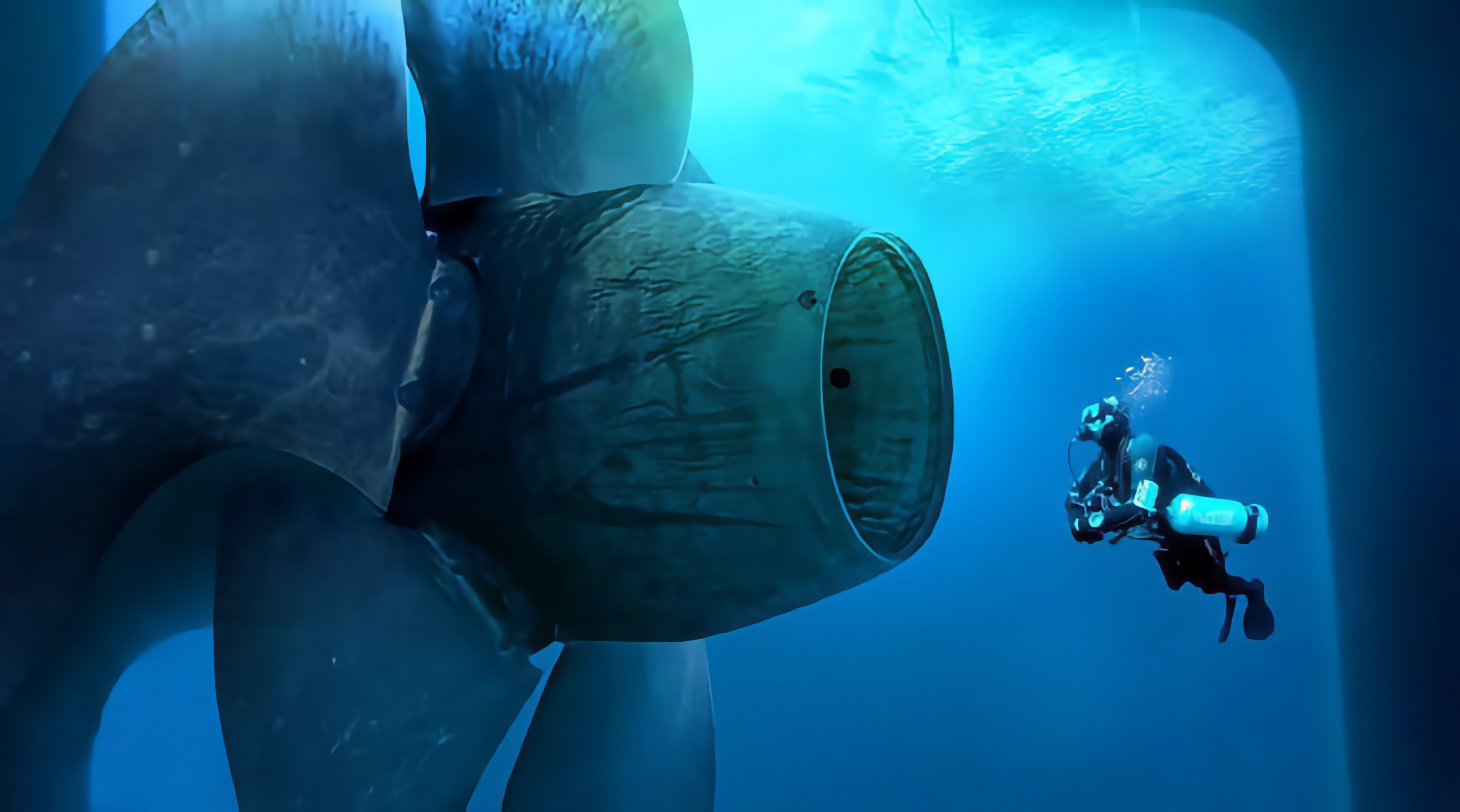
Propeller Micro-Roughness & Cavitation Subsea Polishing

Propeller Micro-Roughness & Cavitation Dynamics: The Physics of Subsea Polishing
In commercial shipping, the propeller is rarely treated with the hydrodynamic respect it demands. It is not merely a rotating metal fan; it is a hyper-sensitive hydrofoil operating in a highly complex, non-uniform wake field. At service speeds, micrometer-level degradation on the blade surface fundamentally destroys the lift-to-drag ratio of the hydrofoil section. This microscopic roughness translates directly into macroscopic fuel penalties, compromising a vessel’s Carbon Intensity Indicator (CII) rating and consuming massive operational margins.
As the maritime industry faces stringent decarbonization mandates, treating propeller fouling as a standard maintenance checklist item is an engineering failure. True subsea hydrofoil restoration requires an understanding of cavitation dynamics, boundary layer physics, naval metallurgy, and the severe operational realities of underwater execution. This masterclass briefing, prepared by the CARGOWARD® Engineering & Diving Team, deconstructs the physics of propulsor micro-roughness mitigation and outlines the empirical frameworks necessary for B2B fleet managers to reclaim lost propulsive efficiency.
Table of Contents
The Hydrodynamic Sensitivity of the Propulsor Blade
The Rubert Scale vs. True Micro-Roughness ($R_a$ and $R_z$)
Naval Metallurgy: The Abrasive Mechanics on Bronze Alloys
Cavitation Inception: The Penalty of Surface Asperities
The Pre-Polishing Subsea Inspection Protocol
Field Realities: Subsea Execution in High-Friction Environments
Counter-Intuitive Truth: When "Cleaning" Ruins Efficiency
Diagnostic Limitations: What Subsea Polishing Cannot Fix
The Mathematics of ROI: A Panamax Case Study
Propeller Degradation Diagnostics (Matrix)
Glossary of Hydrodynamic Terms
Frequently Asked Questions (FAQ)
References & Regulatory Frameworks
The Hydrodynamic Sensitivity of the Propulsor Blade
The global hull and the propeller operate in radically different fluid dynamic regimes. While the hull’s massive length dictates a fully turbulent boundary layer primarily concerned with skin friction, the propeller blades operate at highly localized Reynolds numbers, cutting through the velocity deficit (wake fraction) generated by the ship's aftbody.
Because the blade acts as a lifting surface, any surface asperity disrupts the delicate pressure distribution between the pressure (face) and suction (back) sides.
The open water propeller efficiency ($\eta_0$) is a function of the advance coefficient ($J$), the thrust coefficient ($K_T$), and the torque coefficient ($K_Q$):
$$\eta_0 = \frac{J}{2\pi} \cdot \frac{K_T}{K_Q}$$
When micro-fouling or improper abrasive damage increases the blade's frictional drag, $K_Q$ (torque demand) rises sharply while $K_T$ (effective thrust) drops. Consequently, the main engine must burn exponentially more fuel to maintain a constant speed-through-water (STW), while increasing the thrust deduction fraction.
The Rubert Scale vs. True Micro-Roughness ($R_a$ and $R_z$)
Historically, the industry assesses blade condition using the visual Rubert Scale (Grades A through F). A newly cast or factory-polished propeller typically presents as Rubert A. Over time, calcium-based micro-fouling and oxidation degrade this to Rubert C or worse.
However, visual inspection is often misleading. Hydrodynamic efficiency is governed by exact surface metrics: $R_a$(the average surface roughness) and $R_z$ (the peak-to-valley height). A surface can appear visually "shiny" to a diver or ROV camera while possessing a high $R_z$ value due to microscopic scratches. True in-water propulsor optimization aims not for a cosmetic gleam, but for the restoration of $R_a$ to $\leq 1.0 \mu m$, directly minimizing the viscous sublayer disruption.
Naval Metallurgy: The Abrasive Mechanics on Bronze Alloys
Propellers are not cast from generic steel; they are highly specialized metallurgical matrices. The vast majority of modern commercial propellers are cast from Nickel-Aluminum-Bronze (Nibral, or CuAl10Ni5Fe4) or, on older vessels, Manganese Bronze.
Nibral is the industry standard because it naturally forms a self-healing, microscopic patina of cuprous oxide and alumina when exposed to seawater. This oxide layer is what prevents deep galvanic corrosion and pitting. When designing a subsea polishing protocol, the objective is to shear the calcareous biofouling without destroying this protective patina.
This is where abrasive mechanics become critical. CARGOWARD specifies multi-stage, diamond-impregnated resin pads (such as specialized 3M marine abrasives) because their micro-cutting action is engineered to plane away biological adhesives (barnacle cement) and calcium deposits while leaving the underlying Nibral oxide matrix largely intact. Using improper abrasives strips the alloy bare, exposing active, un-oxidized metal to the seawater electrolyte, which instantly accelerates localized galvanic corrosion and rapid re-fouling.
Cavitation Inception: The Penalty of Surface Asperities
Cavitation is not an inevitable byproduct of propulsion; it is a localized pressure failure. It occurs when the static pressure on the suction side of the blade drops below the fluid's vapor pressure. The susceptibility of a propeller to this phenomenon is defined by the Cavitation Number ($\sigma$):
$$\sigma = \frac{p - p_v}{\frac{1}{2} \rho V^2}$$
Calcareous micro-fouling exponentially accelerates cavitation inception. These microscopic barnacle bases act as geometric nucleation sites for vapor bubbles.
While thin sheet cavitation may be relatively benign, roughness-induced flow separation frequently triggers destructive tip-vortex and cloud cavitation. When these vapor cavities collapse against the bronze alloy, they generate shockwaves that cause severe blade pitting, trailing edge erosion, and intense hydro-acoustic vibrations that transfer directly into the sterntube bearings.
The Pre-Polishing Subsea Inspection Protocol
True hydrodynamic recovery begins long before an abrasive pad touches the alloy. CARGOWARD diver-engineers execute a rigorous tactical assessment of the stern arrangement, operating as subsea diagnosticians. Relying purely on visual data in turbid water is insufficient; our protocols mandate tactile empiricism.
Prior to intervention, our divers execute lock-out procedures to physically measure cavitation pit depths on the trailing edge using tactile gauges. We inspect the rope guard and sterntube seal integrity to ensure no synthetic lines have compromised the shaft bearings. We check the impressed current cathodic protection (ICCP) anodes and boss cap fins for galvanic corrosion or entanglement. Assessing the existing $R_a$ baseline manually in zero-visibility conditions ensures that the subsequent abrasive selection is engineered for the exact state of the hydrofoil.
Field Realities: Subsea Execution in High-Friction Environments
Theoretical physics meets absolute friction in the water. Achieving a true Rubert 'A' standard ($R_a < 1.0 \mu m$) requires disciplined execution under brutal environmental constraints.
Consider a CARGOWARD diving supervisor operating in major Brazilian export hubs such as the Ponta da Madeira Maritime Terminal (Itaqui) or the Port of Santos. These anchorages frequently subject divers to 2-knot tidal currents and zero-visibility turbidity. In these environments, the diver's umbilical acts as a sail, catching the current and pulling the diver away from the blade.
If a diver fights the current while operating a hydraulic polishing tool, the applied pressure on the blade becomes uneven, creating a "wavy" hydrodynamic profile. To counteract this, our engineers utilize specific subsea rigging and lock-out tethers. This secures the diver's position relative to the hydrofoil, allowing the hydraulic polishing head to maintain perfectly perpendicular, consistent pressure across the complex camber of the blade, regardless of tidal drag. This separates high-tier engineering diving from basic commercial labor.
Counter-Intuitive Truth: When "Cleaning" Ruins Efficiency
There is a persistent, dangerous myth in maritime operations that any removal of marine growth is beneficial. In reality, subsea cleaning by uncertified vendors using aggressive wire brushes is catastrophically detrimental to performance.
A stiff wire brush will quickly strip away barnacles, leaving the metal visually clean above water. However, at a microscopic level, the stiff bristles score the Nibral alloy, creating deep longitudinal striations. This dramatically increases the $R_z$ (peak-to-valley) roughness. The result is a propeller that looks shiny but hydrodynamically acts like sandpaper, permanently lowering $\eta_0$ and ensuring that the next generation of biofouling will adhere faster and deeper into the alloy matrix.
Diagnostic Limitations: What Subsea Polishing Cannot Fix
Honest engineering requires defining limits. Subsea hydrofoil restoration is the highest ROI intervention available, but it is not a panacea for all propulsion failures. B2B technical managers must understand that polishing will not resolve:
Advanced Trailing Edge Erosion: If cavitation has already caused severe metal loss (anti-singing edge destruction), polishing cannot restore the lost lifting geometry.
Mechanical Pitch Deflection: Bent blades from ice or debris strikes require dry-dock cropping and dynamic balancing.
Deep Engine De-tuning or Shaft Misalignment: If the torque rise is caused by a failing thrust bearing, a Rubert A propeller will only mask the root cause temporarily.
The Mathematics of ROI: A Panamax Case Study
To understand the financial and regulatory impact of propulsor grooming, consider the empirical data of a standard Panamax bulk carrier (approx. 82,000 DWT) operating at a service speed of 14 knots, consuming roughly 30 Metric Tons (MT) of VLSFO per day.
If the propeller degrades from a Rubert A to a Rubert C condition, the resulting loss in $\eta_0$ typically induces a 4% to 6% increase in shaft power demand to maintain the same STW.
Fuel Penalty: A 4% penalty equates to an additional 1.2 MT of VLSFO consumed per day.
Financial Cost: At an average bunker price of USD 600/MT, this is a daily loss of USD 720, or roughly USD 21,600 over a standard 30-day voyage.
The ROI: A professional multi-stage subsea propeller polish costs a fraction of this voyage loss. The payback period for the intervention is frequently realized within the first 5 to 8 days of sailing.
More critically, burning an extra 1.2 MT of fuel generates an additional 3.7 MT of $CO_2$ per day. Over a year, this unmitigated parasitic drag artificially inflates the vessel’s Annual Efficiency Ratio (AER), directly pushing the vessel closer to a CII rating downgrade (e.g., slipping from Band C to Band D), which triggers mandatory corrective action plans and reduces charterability.
Propeller Degradation Diagnostics (Matrix)
Telemetry Symptom | Hydrodynamic Cause | Required Subsea Intervention | Expected ROI |
Gradual torque rise, constant STW | Micro-fouling ($R_a$degradation) | Multi-stage subsea polishing | Immediate fuel/NM reduction |
Sudden narrow-band vibration | Wake distortion / localized fouling | Targeted inspection & hydrofoil grooming | Sterntube bearing preservation |
High slip ratio, reduced top speed | Macro-fouling / flow separation | Macro-growth removal + diamond polishing | Major thrust ($K_T$) recovery |
Cavitation noise (hydro-acoustic) | Suction-side nucleation sites | Micro-roughness mitigation (Rubert A target) | Prevention of blade pitting |
CII rating step-down (C to D) | Cumulative $\eta_0$ loss increasing AER | Full propulsor micro-roughness mitigation | AER correction restoring CII compliance |
Glossary of Hydrodynamic Terms
Wake Fraction ($w$): A dimensionless coefficient expressing the velocity deficit at the propeller disc relative to ship speed, defined as $w = 1 - V_A/V_S$.
Peak-to-Valley Height ($R_z$): A surface roughness parameter quantifying the extreme asperity heights that act as discrete cavitation nucleation points.
Cavitation Inception: The threshold condition where local static pressure drops below seawater vapor pressure, initiating destructive vapor cavities.
Nibral Alloy: A nickel-aluminum-bronze marine alloy (ISO 836) that relies on a delicate self-healing cuprous oxide layer, easily destroyed by improper abrasive wire brushing.
Advance Coefficient ($J$): A dimensionless parameter relating advance speed to rotational speed and diameter, governing the resulting $K_T$ and $K_Q$ on the open-water diagram.
Frequently Asked Questions (FAQ)
References & Regulatory Frameworks
[1] International Towing Tank Conference (ITTC). Recommended Procedures and Guidelines: Propeller Surface Roughness, ITTC 7.5-02-03-02.
[2] International Organization for Standardization. ISO 11464: Shipbuilding and Marine Structures — Propellers — Finishing of Propeller Blade Surfaces.
[3] International Maritime Organization (IMO). Guidelines on Operational Carbon Intensity Indicators and the Calculation Methods, MEPC.336(76).
[4] Carlton, J.S. Marine Propellers and Propulsion, 4th Edition. Butterworth-Heinemann, 2019.
Prepared by the CARGOWARD® Engineering & Diving Team. If you require an engineering-led assessment to diagnose performance drops and execute compliant interventions, explore our in-water hydrodynamic grooming capabilities.