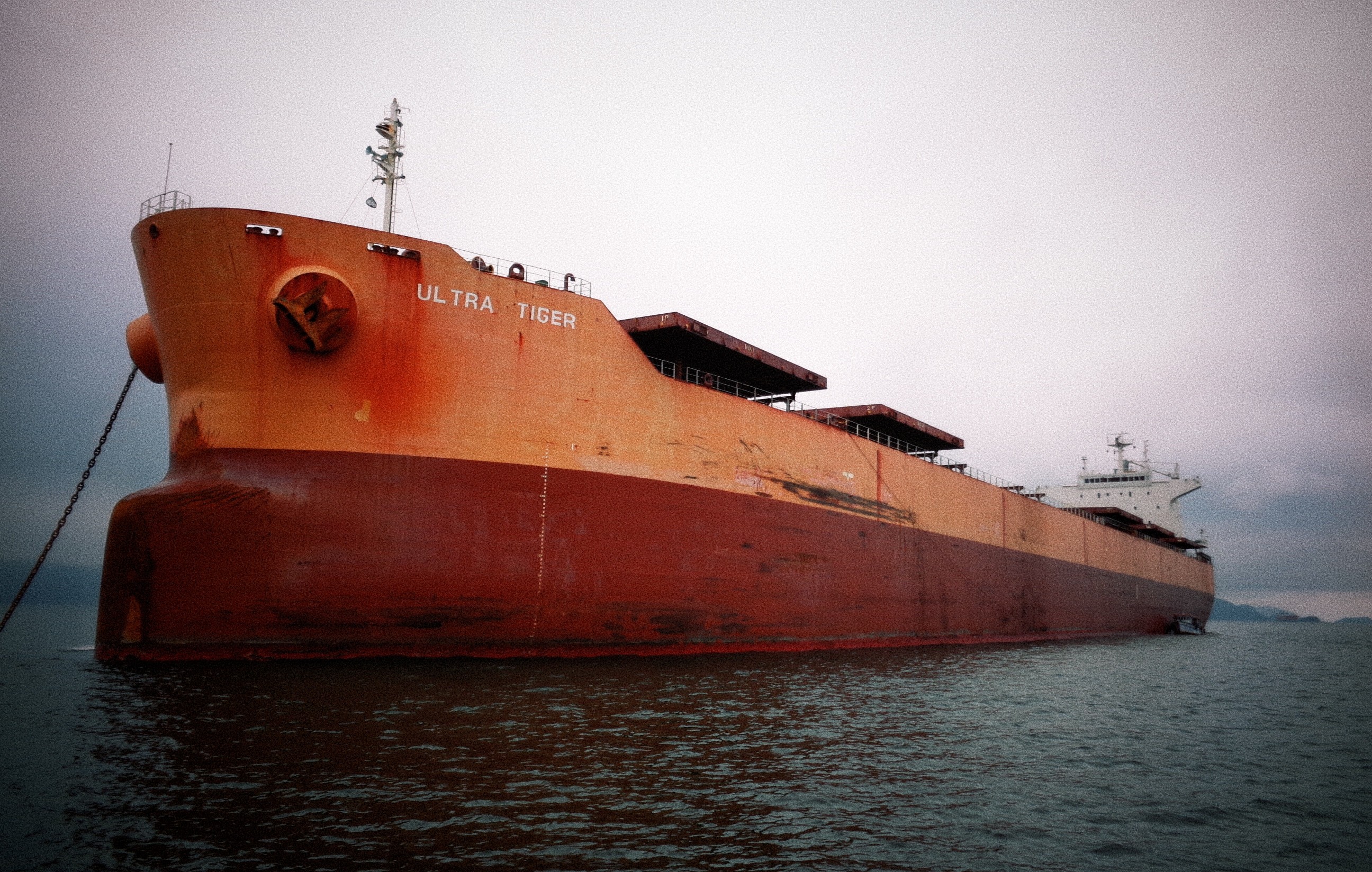
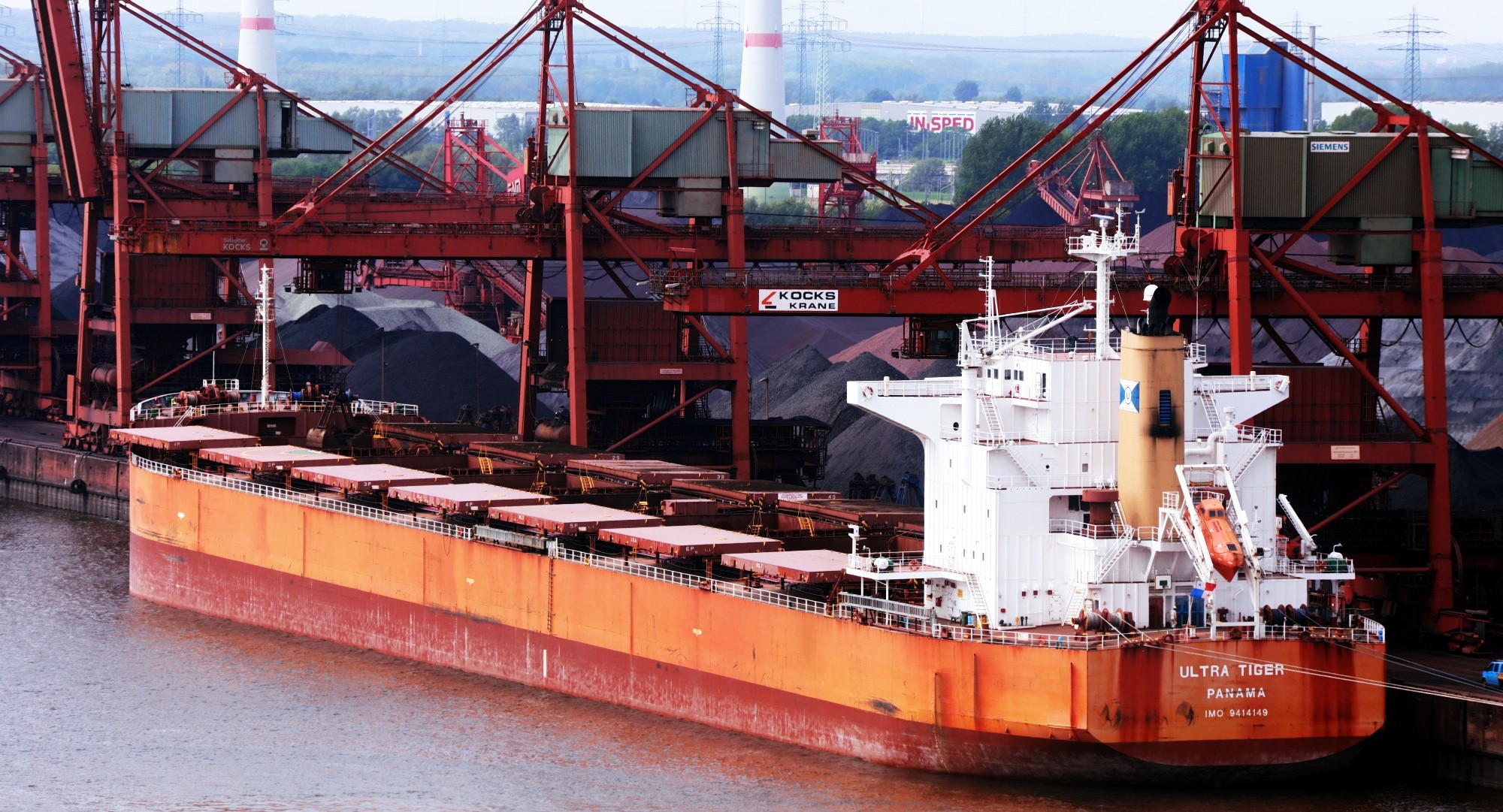
ULTRA TIGER
Year:
2020
Service:
Cargo Hold Cleaning
Vessel Type:
Dry Bulk / Bulk Carrier
Size:
14 dedicated cleaning gang
Client Website:
Port of Santos: coal-to-grain hold cleaning on M/V ULTRA TIGER (IMO 9414149, now NAV VIDYA). 7 holds cleaned with 500-bar hydro-jetting, seawater pre-wash, chemical treatment, bilge cleaning, drying, white-rag test; survey accepted.
Introduction
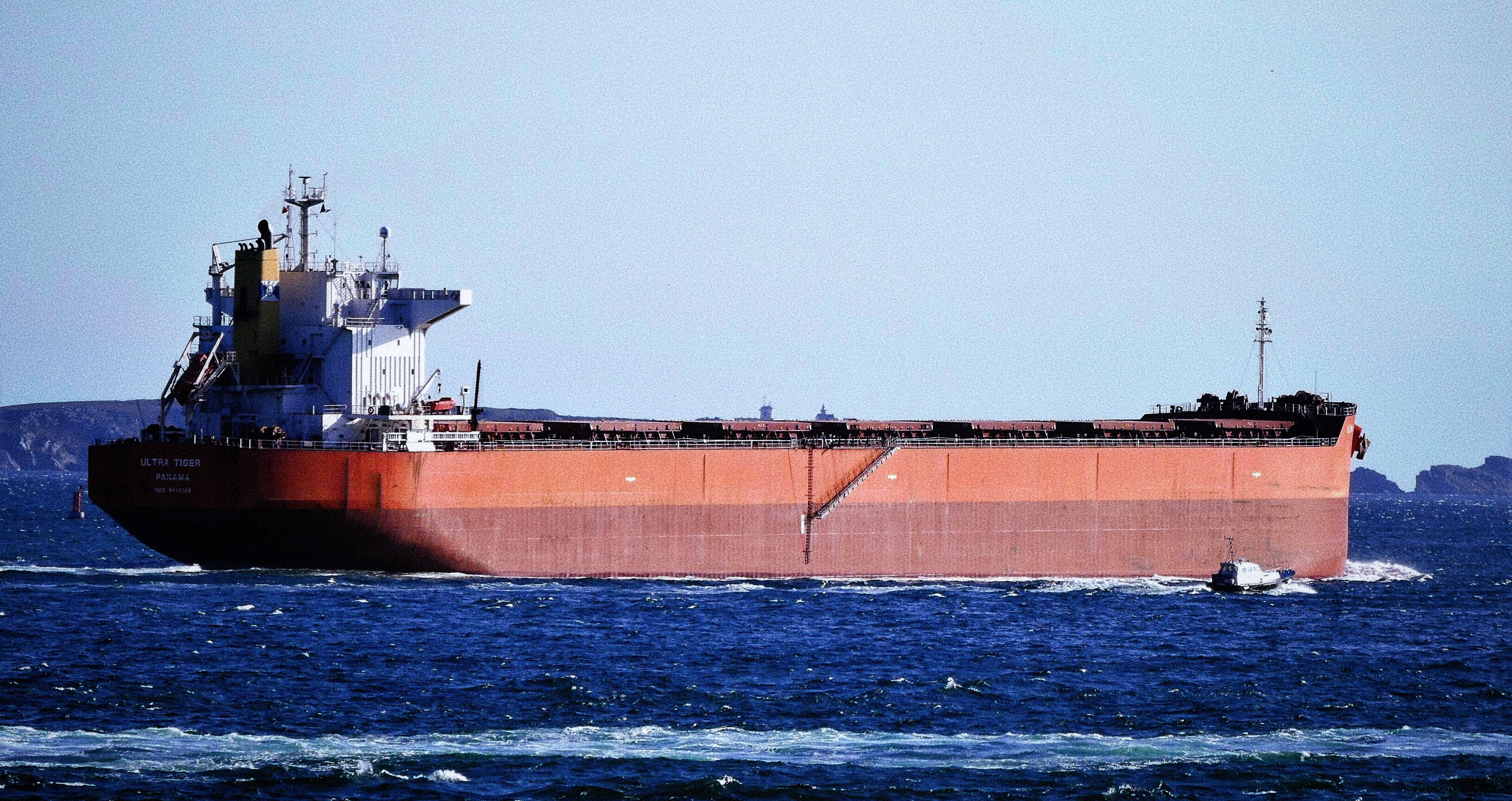
Vessel: M/V ULTRA TIGER (now sailing as NAV VIDYA), IMO 9414149
Location/Year: Port of Santos, Brazil — 2020
Scope: Convert 7 cargo holds from prior coal service to grain-standard readiness, focusing on contamination control across tank top, bilges, hoppers/lower stools, frames/brackets, and hatch interfaces where recontamination typically occurs.
Challenge
Coal and petcoke residues generate persistent contamination risk through fine dust, staining, and residues embedded in structural recesses (frame bays, brackets, scallops, hopper corners, tank top edges, and bilge wells). Grain readiness depends on controlling transfer risk and eliminating smearing/loose residues—particularly at low points and shadow zones—under a tight port-call timeline.
Solution
CARGOWARD® applied a structure-first workflow designed for coal/petcoke-to-grain conversions:
Dry preparation, sweeping & residue collection
Loose residues were mechanically removed and collected prior to wet cleaning to reduce dust redistribution and avoid driving contamination into structure geometry during washdown.Seawater pre-wash for heavy residues
A seawater wash stage was applied to break down and mobilize strong, adhered residues, with attention to runoff control toward low points and bilges.Chemical treatment (coal/petcoke residue-specific)
A specialized cleaning chemical suitable for coal / petcoke residue removal was applied where required to address staining and carbon-rich deposits—selected based on the cargo profile and compatibility with shipboard cleaning controls.High-pressure hydro-jetting (500 bar)
Targeted 500 bar hydro-jetting was used to detail critical contamination traps: frames, brackets, web frames, scallops, hopper transitions, tank top edges, and bilge well boundaries—executed with controlled sequencing to avoid re-depositing residues onto cleaned surfaces.Bilge wells and low-point detailing
Bilges and low points were cleaned and detailed to eliminate residual fines and washdown carryover, reducing the most common rejection drivers during grain readiness inspection.Drying by natural ventilation (weather-permitting)
Drying was managed using natural ventilation under favorable local conditions, stabilizing the hold condition and reducing smear/transfer risk prior to final checks.Final wipe-down and verification
Final detailing was completed using rags and practical verification checks, including white glove / white rag testing, to confirm cleanliness effectiveness and readiness for grain-standard expectations.Surveyor attendance and acceptance
A surveyor was called onboard after completion. Holds were inspected and accepted, after which the vessel proceeded to the berth for loading operations.
Throughout the process, residues and cleaning by-products were handled under controlled ship/port constraints with documentation suitable for owner/operator reporting and post-call traceability.
Result
7 cargo holds converted from coal to grain-standard readiness within a 72-hour turnaround window.
Contamination risk reduced by prioritizing frames/hoppers/bilges/hatch interfaces rather than only flat surfaces.
Holds accepted by surveyor and vessel proceeded to berth for loading with documented condition verification.