Brazil’s NORMAM-401/DPC Biofouling Rules: Complete Compliance Guide for Ship Operators and Fleet Managers

Effective date: June 17, 2025
Full enforcement (including penalties): February 1, 2026
Aligned with: IMO 2023 Biofouling Guidelines (MEPC.378(80))
Executive Overview
Brazil has significantly strengthened its environmental protection measures by introducing Chapter 4 of NORMAM-401/DPC, a comprehensive biofouling management regulation that came into effect on June 17, 2025, with full enforcement—including penalties—beginning February 1, 2026. This regulation aligns with the IMO’s 2023 Biofouling Guidelines (MEPC.378(80)) and establishes mandatory procedures for preventing the transfer of invasive aquatic species through ship hull and niche-area biofouling.
For ship operators, charterers, owners, and maritime service providers, understanding and implementing these requirements is critical to ensure compliance, avoid operational delays, and protect the marine environment—while maintaining operational efficiency and schedule reliability.
Newsroom takeaway: Biofouling compliance is no longer “nice to have” in Brazil. It is becoming an operational requirement that affects voyage planning, port calls, inspection outcomes, and cost exposure.
Quick Reference Tables
Table A — Enforcement Milestones
Milestone | Date | What changes in practice |
|---|---|---|
Chapter 4 enters into force | June 17, 2025 | Planning, records, inspections, and cleaning control requirements apply |
Adaptation window (commonly treated as “grace period”) | Jun 17, 2025 → Jan 31, 2026 | Operators align documents and routines; enforcement focuses on implementation readiness |
Full enforcement incl. penalties | February 1, 2026 | Non-compliance may trigger sanctions, fines, delays, detention, denial of transit/entry |
1. What is Biofouling and Why Does It Matter?
1.1 Definition and Biological Process
Biofouling is the accumulation of aquatic organisms on submerged surfaces of ships’ hulls and niche areas. This includes microorganisms (bacteria, fungi, microalgae), plants, and animals ranging from microscopic organisms to visible creatures such as barnacles, mussels, and tubeworms. The process develops in two distinct phases:
Microincrustation (Microfouling): The initial colonization of the hull surface by bacteria, fungi, and microalgae that form a biofilm layer, commonly referred to as “slime.” This typically appears within hours to days of immersion and is almost invisible to the naked eye, though it creates a sticky film on the surface. Microincrustation is the precursor to more serious fouling problems and is one of the first signs that monitoring is needed.
Macroincrustation (Macrofouling): The settlement and growth of visible organisms such as barnacles (cracas), tubeworms (poliquetas tubícolas), mussels (mexilhões), macroalgae, bryozoans, sea squirts (ascídias), and other large encrusting organisms. This stage becomes visible after weeks to months of ship immersion and represents a more serious contamination problem. Macrofouling can significantly impact operational performance and environmental risk.
1.2 Environmental and Operational Impact
Biofouling presents multiple serious challenges for the maritime industry and marine ecosystems:
Invasive Species Transfer: Studies commonly point to shipping as a major pathway for introducing invasive species in coastal and estuarine environments. When a ship with biofouled hull surfaces enters new waters, organisms can detach and establish themselves in local ecosystems where they may have no natural predators. This can devastate native biodiversity, disrupt food chains, damage fisheries, and threaten human health.
Fuel Consumption and Emissions: A fouled hull increases hydrodynamic drag and skin friction, requiring greater propulsive power. Depending on fouling severity, research commonly indicates that macrofouling can significantly increase fuel consumption—in some cases reported in the range of 40–86%. This translates directly to higher operational costs, increased CO₂ and other emissions, and a larger carbon footprint for fleet operations.
Hull and Equipment Damage: Biofouling in niche areas—such as sea chests, cooling systems, bow thrusters, echo sounders, and sonar transducers—can clog intake lines, disrupt water flow, compromise structural integrity, and degrade navigational equipment performance.
Economic Costs: The cumulative effect of higher fuel costs, maintenance expenses, scheduled dry-docking for hull cleaning and repainting, and potential operational delays can represent a significant financial burden for ship operators over a vessel’s operational life.
2. NORMAM-401/DPC: The Brazilian Regulatory Framework
2.1 Legal Basis and Scope
NORMAM-401/DPC is issued by the Diretoria de Portos e Costas (DPC) of the Brazilian Navy under Ordinance DPC/DGN/MB No. 180/2025 (published June 10, 2025, in the Official Gazette). The regulation is divided into four chapters:
Chapter 1: Oil and hazardous substance discharge prevention
Chapter 2: Ballast water management
Chapter 3: Prohibition of harmful anti-fouling systems
Chapter 4: Biofouling management (new, effective June 17, 2025)
Chapter 4 specifically addresses biofouling control and applies to all vessels exceeding 24 meters in length that operate, anchor, or berth within Brazilian jurisdictional waters, which extend from the territorial sea (12 nautical miles) through the Exclusive Economic Zone (200 nautical miles).
2.2 Applicability and Exemptions
Table 1 — Applicability vs. Exemptions
Category | Covered by Chapter 4? | Notes |
|---|---|---|
Commercial vessels (cargo, container, tanker, bulk, etc.) | Yes | If >24m and operating/anchoring/berthing in Brazilian waters |
Government vessels (non-military) in commercial navigation | Yes | Treated similarly to commercial fleet when used commercially |
Fishing vessels >24m | Yes | Applies to commercial fishing ships over 24m |
Offshore support vessels | Yes | Applies to vessels supporting O&G operations |
Pleasure yachts/recreational vessels >24m | Yes | Large recreational craft included |
Warships / naval auxiliaries in non-commercial service | No (Exempt) | Military and certain government service exemptions |
Diplomatic/official foreign government vessels (non-commercial) | No (Exempt) | Official non-commercial duty |
Offshore production units (FPSOs, FSUs, platforms) | Generally exempt / separate licensing | Often subject to specific environmental licensing regimes |
Vessels under 24m | No (Exempt) | Best practice guidance recommended |
2.3 The Three Brazilian Biogeographic Regions
Brazil’s coast is divided into three distinct marine biogeographic regions, each with unique ecosystems and species composition. Vessels transiting between these regions face stricter biofouling requirements to prevent species transfer:
Region 1 – North: Encompasses the Amazon estuary and tropical waters from the mouth of the Amazon River to the northeastern coast.
Region 2 – Northeast: Extends from the northeastern tip to the beginning of the southeastern coast.
Region 3 – Southeast–South: Covers the southeast and southern coast, including cooler waters of the south.
When a vessel transits between these distinct biogeographic regions, it must comply with specific biofouling rating limits to prevent the inadvertent introduction of species from one ecosystem to another.
3. Key Requirements: Biofouling Management Plans and Records
3.1 Biofouling Management Plan (BFMP)
Every vessel subject to NORMAM-401 must develop and maintain a comprehensive Biofouling Management Plan (BFMP). This is a vessel-specific operational document that outlines how the ship will minimize, monitor, and manage biofouling throughout its service life. The BFMP is not a one-time document and should be updated as operational profiles, routes, and maintenance schedules change.
Table 2 — BFMP minimum content (Annex H checklist)
BFMP component | What it should include |
|---|---|
Ship-specific information | Name, IMO, flag, dimensions, tonnage, trading pattern, typical routes, speed, port residence time |
Anti-fouling system details | Coating type/brand, application dates, service life remaining, manufacturer specs, maintenance requirements |
Niche area identification | Diagram + description of high-risk areas (sea chests, thrusters, seals, transducers, stern tube, propeller hubs, etc.) |
Inspection procedures | Method, frequency, responsibilities, and risk-based intervals |
Cleaning regime | Proactive vs reactive triggers; dry-dock vs in-water methods |
Maintenance procedures | Coating repair protocol, damage response, reapplication schedule |
Recordkeeping procedures | How actions are logged in the Biofouling Record Book |
Contingency planning | What to do when biofouling is detected unexpectedly (port call/transit) |
Compliance documentation | AFS documentation and any regulatory evidence kept onboard |
Language requirements: The BFMP must be written in Portuguese for Brazilian-flagged vessels and vessels with temporary registry (AIT) operating exclusively in Brazilian waters. If a Brazilian vessel operates internationally, the plan may be in English with a Portuguese translation provided.
3.2 Biofouling Record Book (BFRB)
Vessels must maintain a Biofouling Record Book (BFRB) aboard—a detailed logbook documenting all biofouling management activities. The BFRB serves as the operational record demonstrating compliance with the BFMP and provides evidence to port state authorities during inspections.
Table 3 — BFRB structure and retention
Section | What it captures | Why it matters |
|---|---|---|
Part I (Activities) | Inspections (results + level), photos/observations, dry-docking, cleaning (method/date/location), coating repairs, reapplication | Proves actions were executed and tracked |
Part II (Risk parameters) | Trading areas, temperature/salinity, port time, speed profile, coating performance notes, conditions accelerating growth | Supports risk-based planning and inspection frequency |
Retention onboard | Minimum 2 years after last entry | Must be available for inspection |
Retention by operator ashore | Additional 3 years after removal | Creates a 5-year audit trail |
Part I of the BFRB records biofouling management activities:
Dates and results of hull and niche area inspections, including biofouling rating
Visual observations or photographs of biofouling condition
Dry-docking events with dates and locations
Cleaning activities (both proactive and reactive), including dates, methods used, and locations
Maintenance or repair work on the anti-fouling system, including areas treated, products applied, and dates completed
Reapplication or renewal of anti-fouling coatings
Part II of the BFRB monitors biofouling risk parameters:
Operational data relevant to biofouling risk: primary trading areas, predominant water temperatures, salinity conditions, typical port residence times, speed profiles
Anti-fouling system performance observations
Environmental conditions that may accelerate biofouling (extended periods in warm tropical waters, prolonged anchoring, slow steaming operations)
4. Biofouling Assessment: Rating Scales and Acceptance Criteria
4.1 The Biofouling Rating Scale (Annex J of NORMAM-401)
NORMAM-401 specifies a standardized rating scale for assessing biofouling extent on hull and niche areas. This scale enables consistent evaluation and determines whether cleaning is required before transit between biogeographic regions.
Table 4 — Biofouling levels, coverage, and expected actions
Level | Description | Coverage (examined area) | Typical action | Operational consequence |
|---|---|---|---|---|
0 | No visible biofouling (slime only) | N/A | Maintain routine inspection | Ideal entry condition |
1 | Light biofouling (microfouling dominant) | <1% | No cleaning required; proactive monitoring | Acceptable for region transit |
2 | Light to moderate macrofouling | 1–15% | Reactive cleaning before region transit; capture recommended; shorten intervals | Possible detention / transit prohibition until cleaned |
3 | Moderate to heavy macrofouling | 16–40% | Cleaning mandatory; dry-docking strongly recommended | Entry/transit prohibition likely; delays expected |
4 | Severe macrofouling | 41–100% | Mandatory dry-docking + coating overhaul | High enforcement risk; detention/denial possible |
4.2 Niche Area Assessment
Beyond the main hull, special attention must be given to niche areas—complex geometries and submerged regions particularly susceptible to accelerated biofouling:
Typical niche areas include:
Sea chests and through-hull fittings
Bow thrusters and transverse thrusters
Propeller hub and shaft
Stern tube and shaft seal areas
Echo sounders and sonar transducers
Underwater inspection ports and camera housings
Hull attachments and bracketry
Rudder and rudder post
Anchor and anchor chain engagement areas
Cathodic protection systems (sacrificial anodes cannot be coated)
Niche areas often serve as early-warning indicators. A vessel may show Level 0–1 on the main hull but Level 2–3 in niche areas, which can require cleaning before transit.
5. In-Water Hull Cleaning: Authorization and Procedures
5.1 Types of Cleaning Permitted
NORMAM-401 recognizes two primary cleaning methodologies:
Dry-docking (in-dry cleaning):
Vessel removed from the water
Most effective and environmentally preferred method
Comprehensive access to hull and niche areas
Enables coating inspection/repair and reapplication
Waste captured and disposed under controlled conditions
Recommended at least annually to prevent macrofouling buildup
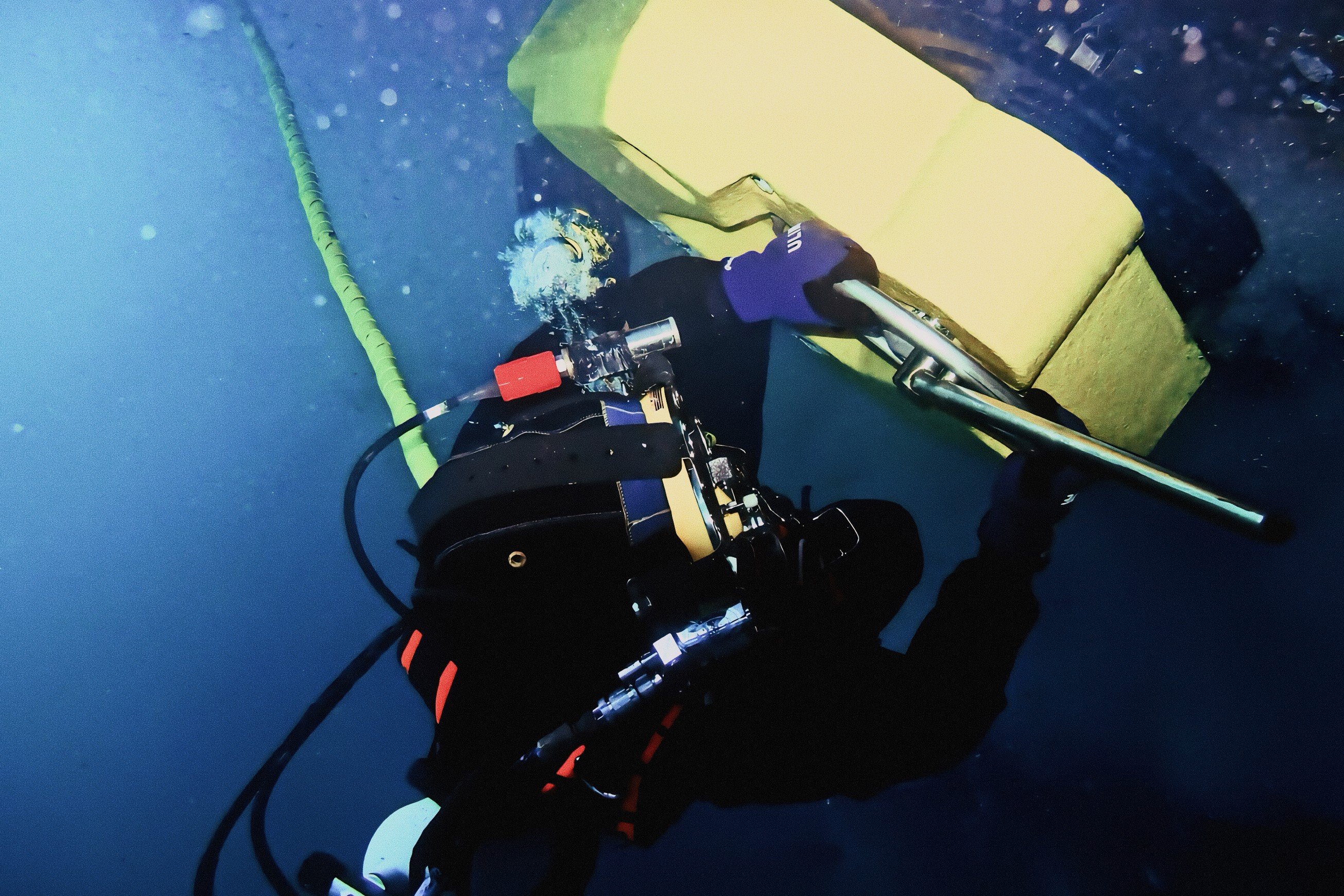
In-water cleaning (subaquatic cleaning):
Hull cleaned while vessel remains afloat
May be proactive (microfouling removal) or reactive (macrofouling removal)
Requires specialized contractors with diving operations and equipment
Table 5 — Cleaning type vs authorization and capture expectations
Cleaning type | When used | Prior authorization | Capture requirement | Notes |
|---|---|---|---|---|
Dry-docking | Full removal + coating repair | Not “port authorization” dependent (shipyard process) | Yes (waste managed ashore) | Preferred method |
Proactive in-water | Microfouling control | Typically not required | Recommended (best practice) | Prevents escalation |
Reactive in-water | Macrofouling removal | Yes (request submitted in advance) | Mandatory at Level ≥2 | Includes request pack + documentation |
5.2 Proactive In-Water Cleaning
Proactive cleaning removes early-stage microfouling before macrofouling develops. This preventive approach:
Typically requires no advance authorization
Uses softer methods (soft brushes, cloths, low-pressure jets)
Preserves anti-fouling coating integrity
Reduces the likelihood of reactive cleaning later
Recommended frequency: Every 3–6 months depending on operational profile and water temperature
5.3 Reactive In-Water Cleaning: Authorization Requirements
Reactive cleaning removes macrofouling and is subject to authorization.
Key requirements:
Minimum 10-day advance notice: Submit an In-Water Cleaning Request (Annex K form) to the local maritime authority (Capitania dos Portos, Delegacia, or Agência) at least 10 days prior.
Required documentation commonly listed:
International Anti-Fouling Certificate or AFS Declaration
Copy of the Biofouling Management Plan
Copy of the Biofouling Record Book
Chronological list of the last 10 ports visited
Latest hull and niche area inspection report with high-resolution photographs
Biofouling removal plan (team, methodology, equipment, capture rate estimate, proposed location)
Additional information deemed relevant by contractor/operator/authority
Waste capture requirement: For Level 2 or above, in-water cleaning must include capture of removed material (organisms and coating debris). Material must be collected and disposed of ashore appropriately.
Port authority coordination: If cleaning is proposed within port limits/anchorages, written permission from the local port authority is also required.
Ecologically sensitive area restrictions: In-water cleaning is prohibited in ecologically sensitive areas and protected areas unless expressly permitted by the competent authority.
5.4 Waste Capture and Environmental Compliance
In-water cleaning must ensure responsible waste management:
Capture methods (containment, collection, suction)
Documented capture performance and procedures
Disposal through licensed waste management facilities ashore
Completion documentation (photos, capture estimates, disposal certificates)
6. Transitioning Between Biogeographic Regions
6.1 Regional Transit Requirements
One of the most significant operational implications of NORMAM-401 is the requirement for vessels transiting between Brazil’s three biogeographic regions to meet biofouling standards.
The requirement: When transitioning from one biogeographic region to another, the vessel must have a biofouling rating of Level 1 or below.
Practical implications:
If Level 2+ is detected entering a new region, the vessel cannot proceed until cleaning is completed
Vessel may be detained, port services denied, and schedules disrupted
Planning proactive cleaning ahead of region entry is essential for reliability
6.2 Grace Period and Enforcement Timeline
June 17, 2025: Requirements took effect (inspection, documentation, authorization procedures)
June 17, 2025 to January 31, 2026: Adaptation period for implementation
February 1, 2026: Full enforcement begins (penalties and sanctions active)
7. Anti-Fouling Systems: Coatings and Alternatives
7.1 Anti-Fouling Coating (AFC) Selection and Application
An effective biofouling management program begins with selecting and applying an appropriate Anti-Fouling Coating (AFC).
Self-Polishing Copolymer (SPC) Coatings:
Common commercial systems
Often copper-biocide-based (post-TBT ban)
Controlled hydrolysis/erosion exposes fresh biocide
Effective for 3–5 years depending on profile
Reapplication typically every 3–5 years
Foul-Release Coatings (FRCs):
Silicone/fluoropolymer-based systems reducing adhesion
Best for vessels with regular higher-speed operations
Less effective for slow-steaming/anchored profiles
Service life typically 5–7 years
Higher initial cost; potential lifecycle benefits where suitable
Marine Growth Prevention Systems (MGPS):
Supplementary systems alongside coatings
Ultrasonic systems, copper ionization, sacrificial anodes/cathodic protection, other technology
Particularly useful for niche areas
Can extend service life and reduce niche-area risk
Prohibited systems:
Systems containing tributyltin (TBT) compounds
Systems using cybutryn (Irgarol 1051) as primary biocide (restricted in many jurisdictions)
NORMAM-401 prohibits harmful anti-fouling systems for vessels operating in Brazilian waters
7.2 Coating Application Standards
Application requirements:
Type approval by recognized organizations; documentation onboard
Manufacturer specifications followed (surface prep, primers, film thickness, curing conditions)
Work documented (product/batch, date, treated area, thickness verification, compliance certificate)
Certification documentation:
Vessels over 400 GT: International Anti-Fouling Certificate or Anti-Fouling Declaration
Vessels under 400 GT: Declaration of Anti-Fouling System signed by operator
All documents available for inspection onboard
7.3 Regular Maintenance and Inspection
Inspection requirements:
Regular visual inspections of hull and niche areas
Coating integrity checks (damage, flaking, erosion)
Early detection of microfouling breakthrough
Documentation in the Biofouling Record Book
Maintenance procedures:
Prompt repairs/touch-ups with compatible products
Document repairs and products used
If deterioration is extensive, dry-docking for repair/reapplication recommended
8. Compliance and Enforcement: Penalties and Sanctions
8.1 Enforcement Mechanism
Enforcement is exercised through Port State Control (PSC) inspections in Brazilian ports/terminals.
Inspection triggers:
Routine entry inspection procedures
Documentary review (BFMP and BFRB)
Visual hull inspection for biofouling indicators
Assessment of regional transit compliance
Authorities conducting inspections:
Capitania dos Portos
Delegacias
Agências
Acting for the DPC
8.2 Administrative Penalties
Penalty framework is based on Brazilian environmental law, including Law 9.605/1998 and Decree 6.514/2008.
Fines referenced in enforcement frameworks may range from BRL 2,000,000 to BRL 50,000,000, depending on severity and circumstances.
Aggravating factors:
Level 3 or 4 macrofouling
Missing BFMP/BFRB
Cleaning in restricted/sensitive areas
In-water reactive cleaning without authorization and/or without capture
Violation of regional transit requirements
Previous violations/reincidence within 36 months
Mitigating factors:
Immediate corrective action
Cooperation with authorities
Strong compliance history
Vessel/operator capacity considerations
8.3 Operational Consequences
Beyond financial penalties, enforcement actions may include:
Vessel detention
Port entry/terminal access denial
Transit denial between biogeographic regions
Immediate corrective actions required (cleaning)
Enhanced inspection frequency on subsequent calls
8.4 Administrative Process and Due Process
Due process protections described include:
Auto de Infração issued with alleged violation details
20 days to present written defense and request hearing
Technical environmental assessment (Laudo Técnico Ambiental) prepared by competent unit
20 additional days to supplement defense (as applicable)
Final judgment within 30 days of defense submission
Appeal to the Director of Ports and Coasts within 20 days
Final determination within 30 days
Operational note: Even while administrative due process runs, operational restrictions (detention/transit denial) may remain in effect.
9. Best Practice Recommendations for Compliance
9.1 Immediate Actions (Before February 1, 2026)
Develop BFMPs aligned with IMO and NORMAM-401 requirements
Train crews and shore teams on inspection, reporting, and documentation
Assess current hull condition via underwater inspections; document with photos/reports
Implement BFRB routines immediately
Schedule proactive cleaning to achieve Level 0–1 ahead of enforcement
Review anti-fouling systems; renew if nearing end of life
Establish internal compliance protocols (monitoring cadence, request process, authority coordination)
9.2 Ongoing Operational Compliance (Post-February 1, 2026)
Table 6 — Suggested inspection cadence by risk profile
Risk profile | Typical characteristics | Suggested inspection interval |
|---|---|---|
High risk | Warm waters, long port dwell, anchoring, slow steaming | Every 3–6 months |
Medium risk | Mixed profiles | Every 6–12 months |
Lower risk | Regular high-speed operations, frequent port transits | Every 12 months |
Additional ongoing actions:
Proactive cleaning whenever Level 0–1 microfouling is detected
Plan cleaning before crossing biogeographic regions
Maintain complete onboard documentation (BFMP, BFRB, AFS certs, photos, cleaning and disposal evidence)
Engage qualified service providers familiar with NORMAM-401
Submit reactive cleaning requests ≥10 days in advance with complete documentation
Monitor risk factors and adjust schedules accordingly
10. How CARGOWARD® Supports Compliance
10.1 Compliance Solutions
Biofouling Management Planning
Vessel-specific BFMP development aligned with NORMAM-401 and IMO guidance
Risk assessment (design, routes, operational profile, environmental exposure)
Fleet-tailored maintenance and cleaning strategies
Training and procedural documentation for crew and shore teams
In-Water Hull Cleaning Services
Proactive and reactive in-water cleaning capabilities
Waste capture systems aligned with Brazilian expectations
Disposal coordination through authorized facilities
Full documentation package after completion
Authorization and Regulatory Coordination
Preparation/submission of In-Water Cleaning Request packages
Coordination with local maritime authority and port stakeholders
Advance planning to obtain approvals and minimize delays
Guidance on regional transit requirements and acceptance standards
Documentation Management
BFRB workflow implementation tailored to your operations
Training on inspection/cleaning/maintenance record quality
Audit support to identify gaps before PSC inspections
Support during inspections and authority interactions
Operational Efficiency
Monitoring protocols balancing compliance and operational efficiency
Strategic dry-docking planning to reduce disruption
Cost analysis and optimization of long-term biofouling strategy
Performance tracking and continuous improvement recommendations
10.2 Why Choose CARGOWARD® for Biofouling Management
Maritime industry expertise combining operations, regulation, and environmental best practices
Brazilian regulatory specialization and local procedural familiarity
Proven service delivery for shipowners/operators/charterers operating in Brazilian waters
Integrated solutions from planning through execution and documentation
Environmental commitment supporting ecosystem protection and operational viability
Conclusion
NORMAM-401/DPC Chapter 4 represents a significant strengthening of Brazil’s environmental protection framework and a commitment to preventing the spread of invasive aquatic species through shipping. For operators of vessels over 24 meters calling Brazilian ports, compliance is mandatory and operationally consequential.
The regulation presents both challenges and opportunities:
Challenges: New documentation requirements, authorization procedures, operational constraints during regional transits, and penalties for non-compliance.
Opportunities: Reduced fuel consumption from cleaner hulls, lower maintenance costs through proactive management, improved operational efficiency, and enhanced environmental responsibility.
The period leading up to February 1, 2026 is a critical window to finalize BFMP/BFRB routines, complete baseline inspections, schedule cleaning as needed, and train personnel. Operators who implement a proactive approach will be best positioned to avoid delays and enforcement actions once full penalties take effect.
For fleet-specific guidance on biofouling management requirements, cleaning authorization procedures, or end-to-end compliance solutions, CARGOWARD® is prepared to support you.
References and Additional Resources
NORMAM-401/DPC (Rev. 1) – Diretoria de Portos e Costas (DPC), Marinha do Brasil
IMO Resolution MEPC.378(80) – 2023 Guidelines for the Control and Management of Ships’ Biofouling
Ordinance DPC/DGN/MB No. 180/2025 – Official Gazette publication
Brazilian Environmental Law: Law 9.605/1998 and Decree 6.514/2008
Appendix: Glossary of Key Terms
Biofouling: Accumulation of microorganisms, plants, and animals on submerged ship hull surfaces and niche areas.
Microfouling (Microincrustation): Early biofilm (“slime”) formed by bacteria, fungi, and microalgae.
Macrofouling (Macroincrustation): Visible organisms such as barnacles, mussels, tubeworms, and macroalgae.
Niche areas: Complex submerged geometries prone to accelerated fouling (sea chests, thrusters, transducers, etc.).
Anti-Fouling Coating (AFC): Protective coating applied to underwater hull surfaces to prevent/delay organism attachment.
Biofouling Management Plan (BFMP): Vessel-specific plan describing procedures for minimizing, monitoring, and managing biofouling.
Biofouling Record Book (BFRB): Logbook documenting inspections, cleaning, maintenance, and compliance evidence.
Proactive cleaning: Early-stage cleaning to remove microfouling before macrofouling develops.
Reactive cleaning: Corrective cleaning to remove established macrofouling.
Biogeographic region: One of three Brazilian coastal ecosystem zones: North, Northeast, Southeast–South.
In-water cleaning: Hull cleaning while afloat, typically using divers and capture equipment.
Dry-docking: Hull cleaning with vessel removed from the water in a shipyard.
Port State Control (PSC): Inspections verifying compliance with applicable regulations.
NORMAM-401/DPC: Brazilian maritime authority standards for preventing environmental pollution by vessels/platforms.
MEPC.378(80): IMO resolution establishing the 2023 biofouling management guidelines.